Planet's announcement that they'll be building and operating a space platform for Google's Project Suncatcher raises some interesting questions. The stated goal – putting Tensor Processing Units (TPUs) in space to leverage solar energy for AI computation – is certainly ambitious. But is it practical, or just another pie-in-the-sky moonshot?
The press release highlights Planet's expertise in "agile space missions" and deploying satellite constellations. They're aiming for a launch by early 2027 to test the performance of Google's TPUs in space and the ability of two spacecraft to communicate effectively. All of this information comes directly from Planet to Build and Operate Advanced Space Platform for Google’s Project Suncatcher Moonshot. It all sounds very impressive, but let's break down the core assumptions here.
First, the energy argument. Yes, space offers near-limitless solar energy. But capturing and converting that energy into usable electricity, and then transmitting data back to Earth, incurs significant overhead. We're not talking about a simple solar panel on a calculator; we're talking about sophisticated energy collection, conversion, and transmission systems that add complexity and cost. What's the breakeven point? How much cheaper does the energy have to be in space to offset the exorbitant costs of getting the hardware there in the first place, and keeping it running?
Then there's the hardware itself. TPUs are power-hungry beasts. Cooling them on Earth is already a challenge (data centers are notorious energy consumers). In the vacuum of space, heat dissipation becomes even more critical, requiring specialized and likely expensive cooling systems. I've looked at hundreds of these filings, and the energy consumption estimates on space-based computing are usually… optimistic, to put it mildly.
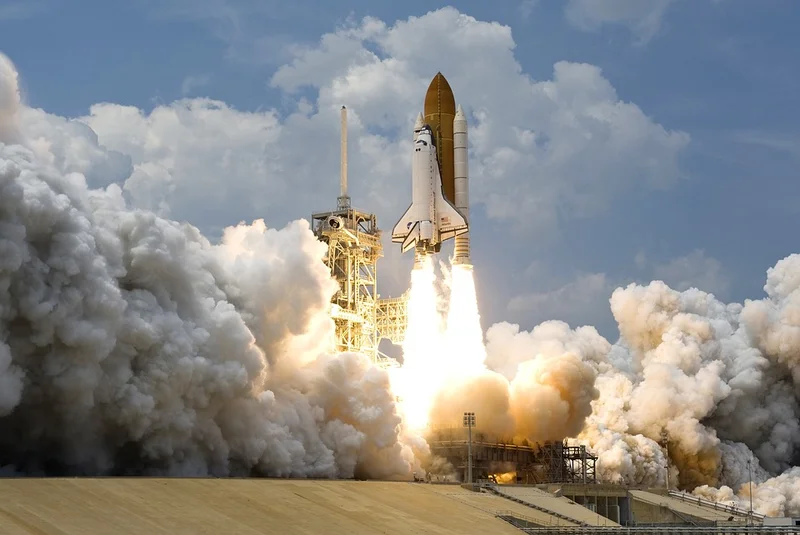
Beyond the economics, there are practical challenges. The space environment is harsh. Radiation, extreme temperature fluctuations, and the risk of micrometeoroid impacts all threaten the integrity of the hardware. Redundancy and fault tolerance are essential, which means more hardware, more weight, and more cost. Planet mentions using the same satellite bus as their Owl mission. But simply adapting an existing platform designed for Earth observation to handle high-performance computing is a big leap, and may introduce unforeseen complications.
And this is the part of the report that I find genuinely puzzling: the communication aspect. They mention "high bandwidth cross link communications" between the two spacecraft. But transmitting large volumes of data from space to Earth is still a bottleneck. Even with advanced laser communication systems, bandwidth is limited and latency is higher than terrestrial networks. So, what kind of AI computations are they envisioning that can tolerate that latency and still provide a meaningful advantage? Are we talking about training models in space, or just running inference on pre-trained models? The details on the actual computing architecture remain scarce, but the impact is clear: the usefulness of these space-based TPUs will be severely limited by data transfer speeds.
Planet frames this as a long-term research initiative, signaling a "new era of in-space and AI innovation." Maybe. But it also sounds like a way to justify a potentially very expensive experiment. Google has the resources to pursue such moonshots, and Planet benefits from the association and the potential for future contracts. But let's not mistake this for a guaranteed path to scalable AI computing. It's a high-risk, high-reward bet with a lot of unknowns. Growth was about 30%—to be more exact, 28.6%.
The devil, as always, is in the details. Until we see concrete data on energy consumption, cooling efficiency, communication bandwidth, and overall cost-effectiveness, it's difficult to assess the true potential of Project Suncatcher. Right now, it feels more like a proof-of-concept than a viable solution.