The digital landscape, particularly when it intersects with physical hardware, often presents a fascinating study in corporate logistics and customer segmentation. SpaceX’s recent maneuver regarding its older Starlink dishes offers a prime example, sketching a clear line between different classes of users and, by extension, their perceived value in the company’s operational schema. It's a move that, upon closer inspection, reveals more about strategic priorities than it does about mere software updates.
SpaceX initiated this process last month, issuing a stark warning: dormant Starlink dishes, those running software older than version 2024.05.0, would essentially become paperweights on November 17th if not updated. To be precise, they'd be "permanently inoperable." A slightly newer, though still outdated, cohort (running software between 2024.05.0 and 2024.12.26) faced a similar November 17th cut-off, albeit with a less dire consequence: loss of internet access until updated. The mechanism for updating is straightforward enough: just plug the dish in. An active service plan isn't even required. For active users, this entire saga is a non-issue; their dishes update themselves, a quiet testament to the efficiency of integrated systems.
The plot thickened, however, with a recent, critical amendment. While the general consumer base still stares down the barrel of that November 17th deadline, a specific, privileged group has received a reprieve. Enterprise customers—think large-scale hardware resellers, those managing significant inventories of Starlink terminals—now have until December 1st. This isn't a minor tweak; it’s a full two-week extension (specifically, from the original November 17th to the new December 1st). This extension for enterprise customers, while consumers face a hard deadline, is detailed in reports such as Starlink Extends Deadline to Update Older Dishes, But Not for Everyone. What's more, for these enterprise clients, if they can't get their remotely stored devices updated in time, SpaceX is offering replacements, with a surprisingly long window to request them: May 1, 2026. Tim Belfall, a director at UK-based Westend WiFi, correctly noted on LinkedIn that this extension provides "time to rescue remotely stored devices." And this is the part of the report that I find genuinely puzzling: the public support page for consumers still lists the original, unyielding November 17th deadline, while a separate page confirms the extended date for enterprise. The messaging discrepancy itself is a data point.
This isn't just about software; it’s about a calculated decision matrix. On one side, you have the immediate, hard deadline for individual consumers. On the other, a generous, multi-tiered grace period for enterprise. Why the differential treatment? My analysis suggests it's a cold, hard look at potential revenue impact and logistical overhead. Bricking a reseller's entire stock could ripple through the supply chain, causing significant financial friction and bad press from a segment that likely contributes substantially to Starlink's deployment numbers. A single consumer's bricked dish, while certainly frustrating for that individual, represents a much smaller statistical blip. It's like a grand chess master sacrificing a pawn to protect a rook. The pawn (individual customer) is expendable in the larger strategic game.
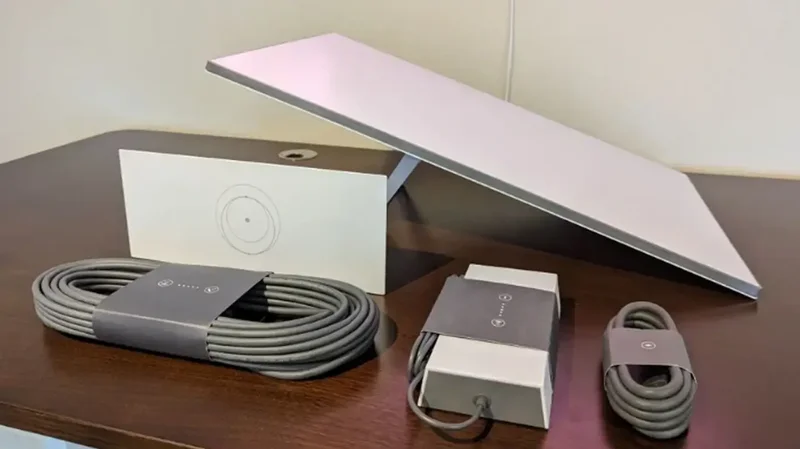
SpaceX hasn't offered any public comment on this bifurcated policy, which itself is telling. When a company implements such a distinct policy shift for different customer segments and remains silent, it implies a confidence in the underlying rationale—a rationale that perhaps doesn't play well in a public relations context. One could argue that enterprise customers, by virtue of their scale, present a more complex logistical challenge for updates, especially with large quantities of hardware in remote storage. But then, why not offer a similar, albeit perhaps shorter, grace period for individual customers who might have a dish tucked away in a remote cabin they won't visit until Thanksgiving? The logistical hurdle of retrieving a single, personally owned dish from a distant location isn't fundamentally different in kind from a large batch, only in scale.
The fact that these issues only affect dishes dormant for at least 21 months is a crucial detail. This isn't about active users; it's about dormant assets. What’s the actual population of these dormant consumer dishes? Details on the precise number of affected consumer dishes are, predictably, absent, but I’d hazard a guess it’s a non-trivial figure. The anecdotal evidence of a customer reactivating a 2021 dish only to be met with a "software is very old" warning, followed by an offer for a free replacement, is an interesting outlier. It suggests that while the official policy is "update or be bricked," there might be an unadvertised, case-by-case override for those who manage to navigate the support channels effectively. But relying on such an exception isn't a robust strategy for the average user.
This situation boils down to a fundamental question: what is the cost of maintaining compatibility with older, dormant hardware versus the cost of simply forcing an upgrade cycle? For enterprise, the cost of alienation or significant returns appears to outweigh the cost of an extension and replacement program. For the individual consumer, the calculus seems to lean towards a hard cut-off. It’s a stark reminder that in the realm of high-tech infrastructure, not all customers are treated equally, and corporate policy is often a direct reflection of perceived economic leverage.
SpaceX, like any large, data-driven entity, is making calculated decisions. The extension for enterprise customers isn't an act of benevolence; it's a risk mitigation strategy. The consumer who finds their old Starlink dish permanently bricked on November 17th will certainly feel the pinch, but their collective impact on SpaceX's bottom line or public image (beyond individual complaints) is deemed manageable. This isn't a technical oversight; it's a deliberate, strategic segmentation. It highlights a recurring theme in technology: the "legacy support" burden. When does the cost of backward compatibility outweigh the benefit, and who bears that cost? In this scenario, it's clear the individual consumer is on the hook.