The modern world, for all its rhetoric of seamless digital connectivity, still operates on a complex, often fragmented, network of borders. These aren't just lines on a map; they’re economic barriers, cultural divides, and personal chasms. What’s truly fascinating, from an analytical standpoint, is how these borders continue to shape outcomes, even as we build increasingly sophisticated bridges across them. We’re seeing a fascinating interplay: the human cost of cross-border living, the institutional ambition to erase academic boundaries, and the fundamental re-architecture of global finance. It’s a messy, intriguing data set, if you know where to look.
Consider the case of Sania Mirza. Her story isn't about GDP figures or market cap; it's about the very real, often invisible, cost of a globally-oriented life. A former world No. 1 in doubles (with six major titles, to be precise), her career demanded constant movement. Her marriage to Shoaib Malik in 2010 was itself a high-profile cross-border union between India and Pakistan, a symbolic bridge in a region often fraught with tension. Then came their son, Izhaan, in 2018. Fast forward to 2024, and the news of their divorce emerges. Now, Mirza finds herself navigating the "daunting" landscape of single parenting, exacerbated by the very cross-border nature of her life. She resides in Dubai but travels frequently to India for work.
This isn’t just a personal anecdote; it's a data point on the increasing strain placed on individuals whose lives span multiple jurisdictions. Mirza openly admits to skipping dinners to avoid eating alone, a stark detail that speaks volumes about the loneliness inherent in such a setup. Karan Johar, in their conversation, tried to frame single parenting as "liberating," but quickly acknowledged Mirza's "more daunting" situation due to the cross-border element. My analysis suggests that while career freedom might be an upside, the emotional and logistical overhead of maintaining a family unit across national lines, especially post-divorce, is a significant, often unquantified, liability. What is the actual, measurable impact of this kind of sustained logistical stress on professional performance or long-term well-being? How many other highly mobile professionals are quietly bearing similar, unacknowledged burdens? It’s a question that rarely makes it into the glossy annual reports of global corporations, but it's a critical component of the human capital equation.
Shifting from the personal to the institutional, we see a different kind of cross-border initiative unfolding in Ireland. The proposed Dundalk Institute of Technology and Queen's University Belfast in new cross-border collaboration is a fascinating case study in strategic academic alignment. DKIT, traditionally focused on industry-linked trade and craft professions, is set to receive "university college" status, with its students receiving degrees directly from QUB. This isn't just about rebranding; it's about leveraging a stronger academic pedigree (QUB is a significant global player) to enhance the perceived value and accessibility of education in the north-east region of Ireland.

The Irish government, through Minister James Lawless, is explicit: this is a "major step forward in creating the first ever all-island university." From a data perspective, this initiative aims to strengthen cross-border collaboration in higher education, enhance research and innovation, and expand opportunities. Student union representatives are, predictably, "welcoming" this, citing increased accessibility and opportunities for funding from both the EU or the UK. But here’s where my skepticism kicks in: While the aspiration for an "all-island university" sounds noble, what are the concrete metrics for success beyond student numbers? What are the projected increases in joint research publications, and more importantly, what's the cost-benefit ratio for QUB in extending its brand and academic oversight to DKIT? This isn't just a handshake; it's a complex administrative and academic integration, and the devil, as always, will be in the statistical details of its execution come the 2026/2027 academic year. This collaboration is like two distinct but geographically proximate ecosystems deciding to share a single, more robust root system, hoping to draw more nutrients and stand taller together. The initial growth will be interesting to track.
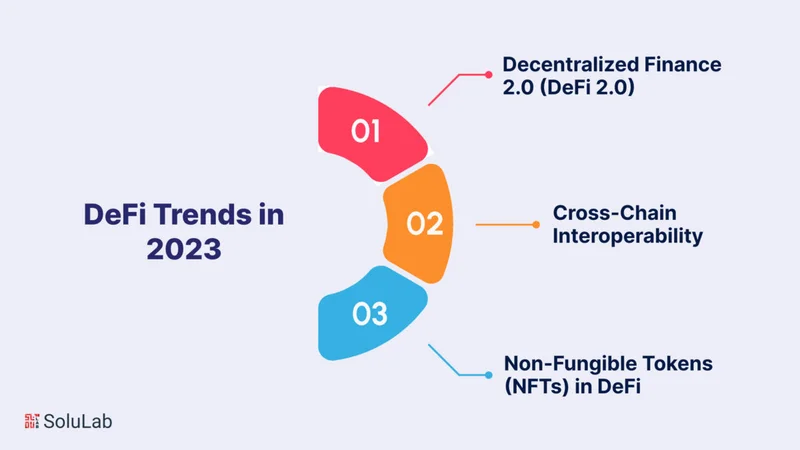
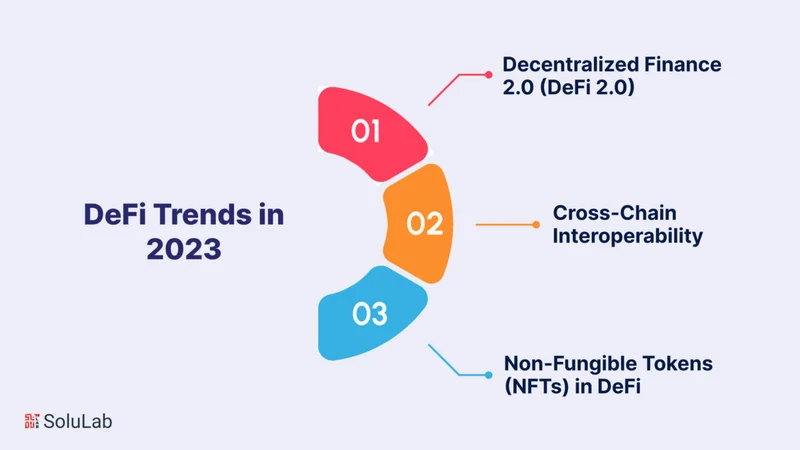
Perhaps the most significant, and certainly the most systemically impactful, cross-border development comes from the financial sector. The UAE executes first cross border digital currency payment with China, using the newly launched 'Jisr' platform, is not just a transaction; it's a declaration. This isn't merely about convenience; it’s a fundamental re-engineering of global financial infrastructure. The 'Jisr' platform, designed for central bank digital currency (CBDC) transfers, promises instant settlement and reduced transaction costs. We're talking about interlinking the UAE’s Instant Payment System with China’s Internet Banking Payment System, enabling secure, real-time money transfers 24/7. This is the kind of data-driven efficiency that traditional banking systems, mired in legacy architecture and multiple intermediaries, can only dream of.
The launch of the 'Jaywan–UnionPay' multi-scheme prepaid card further solidifies this bilateral financial integration. Sheikh Mansour bin Zayed Al Nahyan highlighted the "depth of the strategic partnership" between the UAE and China, and my analysis suggests this goes far beyond diplomatic pleasantries. This is about establishing new, direct financial rails that bypass existing global payment networks—a clear strategic move for both nations. The system is slated for expansion in 2026, with more central banks expected to join. This isn't just about faster payments; it’s about control, cost efficiency, and potentially, a new global financial order. The established players, who have long profited from the friction and delays in cross-border transactions, are now looking at a future where their margins could be severely squeezed. I've looked at hundreds of these financial infrastructure shifts, and this particular move, with its explicit focus on CBDCs and direct interlinking, is a significant outlier in its ambition. The real question isn't if this will gain traction, but how quickly it will erode the market share of older systems, and what that means for the global flow of capital in the coming decade.
What these three disparate events—a personal struggle, an academic merger, and a financial revolution—demonstrate is that "cross-border" isn't a singular phenomenon. It's a spectrum ranging from profound personal challenges to ambitious institutional integrations and, ultimately, to the re-platforming of global economic interactions. The common thread is the increasing velocity of connection and, paradoxically, the persistent friction that remains. Whether it's the emotional toll on an athlete-turned-single-parent, the administrative complexities of an "all-island university," or the geopolitical implications of a new digital payment backbone, the data, both quantitative and qualitative, tells us one thing: the world is shrinking, but the nuances of navigating its remaining borders are only growing more complex. The old models are being disrupted, and while opportunities abound, the hidden costs are very real.