The news out of Alexandria is heartbreaking: a life lost, a family shattered, all because of a single, devastating moment of human error. Brian Ashmore, now charged with reckless homicide after Shirley Yeary’s death in a collision at the AA Highway and Kentucky 709 intersection, is a stark reminder of how fragile life can be, and how quickly things can go wrong. You can read more about the charges in "Ewing man charged in connection to fatal collision in Alexandria."
But what if they didn't have to? What if technology could step in, not just to investigate after the fact, but to actively prevent these tragedies from happening in the first place? I know, it sounds like science fiction, but stick with me.
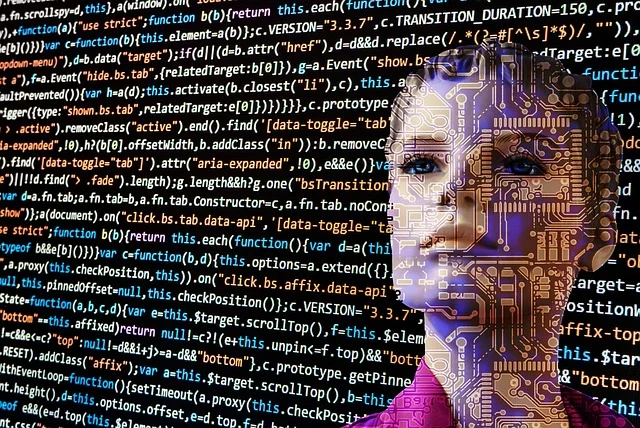
We're talking about AI-powered autonomous driving systems, but not just the kind that keeps your car in its lane. I'm envisioning a future where every vehicle, especially large trucks like the semi involved in this accident, is equipped with an AI co-pilot. This AI wouldn't just monitor the road; it would anticipate danger, override human error, and make split-second decisions with superhuman precision. Think of it as a digital guardian angel, constantly watching over us, ready to intervene when we falter.
The Alexandria police report states that the semi driver “disregarded a red light.” Now, we don’t know why that happened. Was it fatigue? Distraction? A momentary lapse in judgment? Whatever the cause, an AI system wouldn’t be susceptible to the same weaknesses. It wouldn’t get tired, it wouldn’t get distracted by a text message, and it wouldn’t make the kind of impulsive decisions that can lead to disaster.
Imagine a scenario where the AI detects that the driver is approaching a red light too quickly. It sounds an immediate alert, and if the driver doesn't respond, the AI takes over, gently applying the brakes and bringing the vehicle to a safe stop. No collision. No tragedy. Just a seamless, invisible intervention that saves a life.

This isn't just about preventing accidents; it's about fundamentally changing our relationship with driving. For decades, we’ve accepted that human error is an unavoidable part of the equation. But what if we could eliminate that variable altogether? What if we could create a world where our roads are safer, our commutes are smoother, and our lives are less at risk every time we get behind the wheel?
I know, I know, it sounds utopian. And, of course, there are challenges. The technology isn't perfect yet. We need to ensure that these AI systems are reliable, secure, and free from bias. We need to develop robust regulatory frameworks to govern their use. And we need to address the ethical implications of handing over control to machines. Are we prepared to trust an algorithm with our lives? Can we ensure that these systems are used responsibly and for the benefit of all? These are big questions, no doubt.
But I believe the potential rewards are simply too great to ignore. We're talking about saving lives, reducing injuries, and creating a future where our roads are safer for everyone. And honestly, when I see stories like this one out of Alexandria, I find myself thinking, we have to try. We owe it to Shirley Yeary, and to all the other victims of preventable accidents, to explore every possible avenue for making our world a safer place.
And the community is clearly thinking along these lines too. I saw one comment on a Reddit thread discussing similar accidents that really struck me: "It's not about taking away driving, it's about augmenting it. Giving us a safety net we desperately need." That's exactly right. It's not about replacing human drivers; it's about empowering them with the tools they need to make better decisions and avoid costly mistakes.
The speed of this is just staggering—it means the gap between today and tomorrow is closing faster than we can even comprehend. It reminds me of the early days of the printing press. Before Gutenberg, knowledge was hoarded, controlled by a select few. The printing press democratized information, making it accessible to the masses and sparking a revolution in human thought. I believe AI-driven safety systems have the potential to do something similar for transportation, democratizing safety and making our roads accessible to everyone, regardless of age, skill, or physical ability. This uses neural networks – in simpler terms, it means the AI can learn from experience, constantly improving its performance and becoming more adept at preventing accidents. When I first started researching this, I honestly just sat back in my chair, speechless. This is the kind of breakthrough that reminds me why I got into this field in the first place.